
Why Dignity Isn't a Soft Add-On
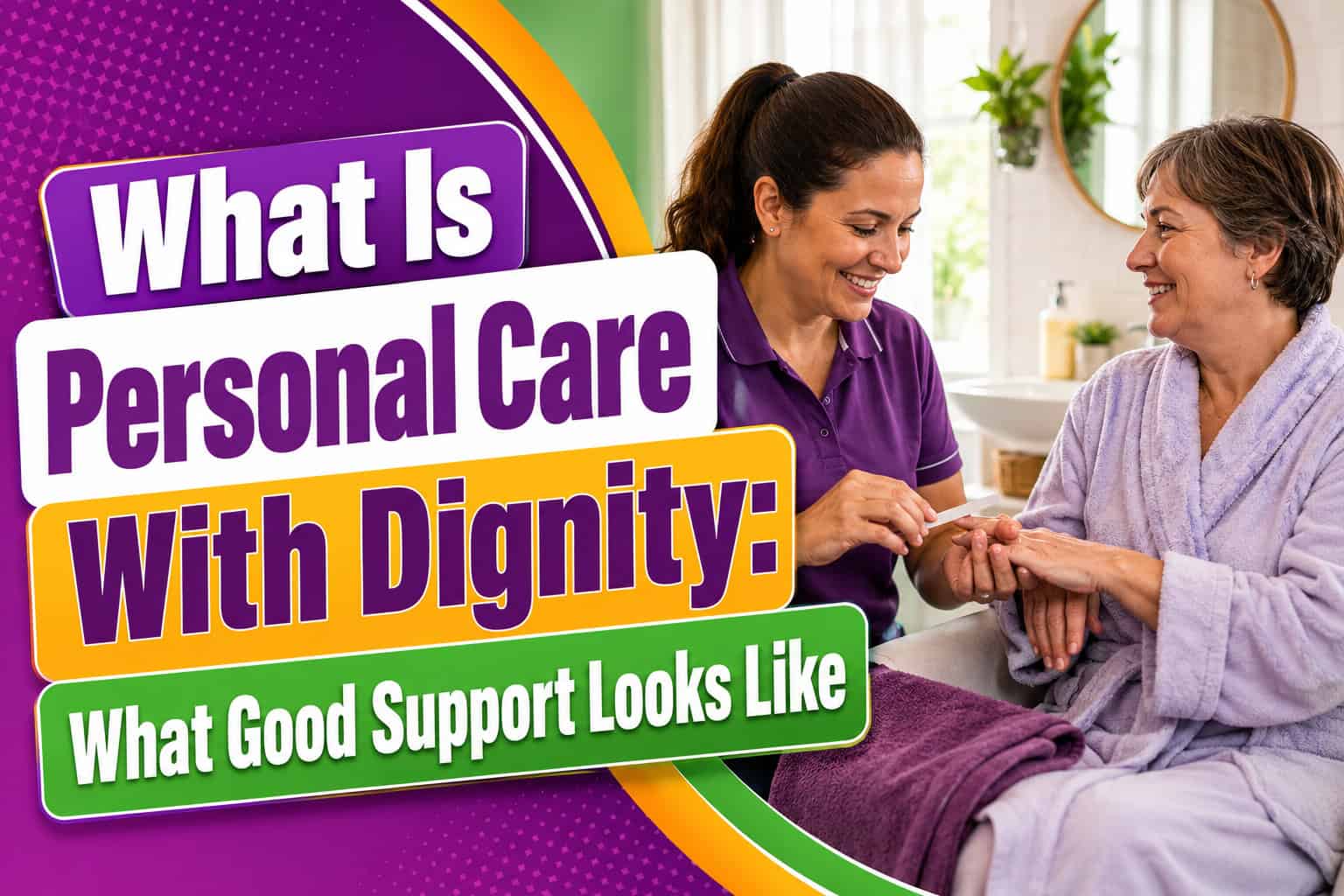
Personal care, showering, dressing, grooming and mobility support, is inherently intimate. How it's delivered matters just as much as whether it's delivered competently. Rushed, impersonal or inconsistent support can leave participants feeling like a task on a checklist rather than a person being cared for.
What Dignified Support Actually Looks Like
- A support worker who explains what they're doing and checks in, rather than working on autopilot.
- Routines built around the participant's own preferences, not a fixed template.
- Consistency in who provides support, so trust builds over time.
- Respect for privacy and pacing, especially during a participant's first few sessions.
The Role of Matching
Preferences around gender, communication style, culture and language genuinely affect how comfortable a participant feels with personal care. Good providers ask about these preferences upfront, rather than treating personal care as interchangeable between any available worker.
What to Raise With Your Provider
If personal care support ever feels rushed or impersonal, it's worth raising directly with your provider. A registered NDIS provider is required to meet the NDIS Practice Standards around dignity and respect, so this is a reasonable and important thing to expect, not an extra.